
Why integration is crucial for an efficient Health Information System
- Integration with RIS and PACS
- Integration with LIS
- Integration with Ultrasound
- Integration with Cardioline
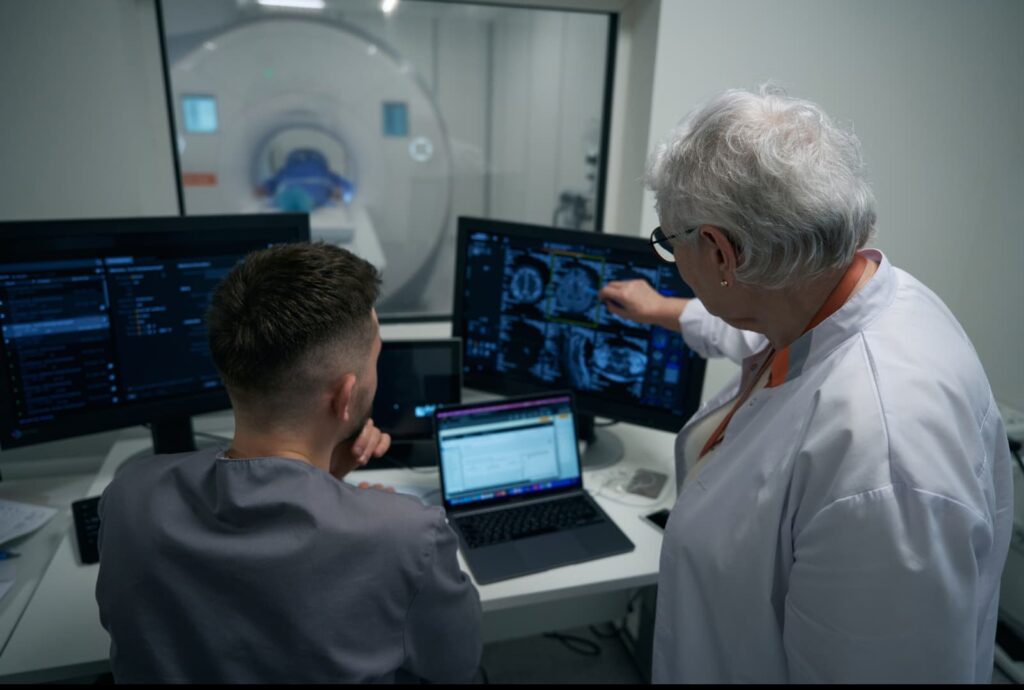
SynClinic healthcare management system can be configured to integrate with the RIS (Radiology Information System) and the PACS (Picture Archiving and Communication System), facilitating the management of radiology reports, such as those from X-rays, CT scans, and MRIs. This integration allows diagnostic reports to be automatically received and stored directly within the management system, making them easily accessible to medical personnel.
Rapid access to radiology reports improves the efficiency of the diagnostic process and optimizes collaboration between clinical departments, ensuring a comprehensive view of patient information. Centralization of reports also enables smoother and more secure data management, ensuring compliance with privacy and health information security regulations.
The platform supports integration with the Laboratory Information System (LIS) for complete management of laboratory reports. Routine and specialized tests, such as blood tests, biochemical and microbiological tests, are automatically captured and stored in the patient's medical record. This integration reduces the risk of manual errors, speeds access to results, and facilitates coordination between physicians and laboratories, ensuring efficient and accurate management of laboratory data.
At the customer's request, SynClinic healthcare software can be customized to capture and store ultrasound images. Integration with sonographers allows automatic import of images and reports directly into the management system, eliminating the need for manual transfers and providing immediate access to data. This facilitates the work of physicians and ensures proper storage and display of diagnostic images within the patient's medical record.
SynClinic can also integrate with Cardioline devices for electrocardiogram (ECG) management. ECG reports and images are automatically captured and stored in the system, improving the efficiency of the diagnostic process and facilitating access to information by medical specialists. This integration ensures proper management of cardiology data and complete traceability of the procedures performed.
Detection of Vital Parameters
Real-Time Continuous Monitoring
Class IIa wearable devices are certified for clinical monitoring of vital parameters and can accurately detect a range of parameters. These parameters are detected continuously and transmitted in real time to the department's monitoring center or the patient's electronic medical record.
- Heart Rate (HR)
- Oxygen saturation (SpO₂)
- Blood pressure
- Body temperature
- Respiratory rate

Benefits for Infiermerical Staff.

Nurses no longer have to manually take vital signs three times a day. Automatic and continuous monitoring allows staff to devote themselves to other nursing and patient care activities.
With real-time data transmission, any anomalies are detected immediately, allowing a early intervention If the patient's clinical condition deteriorates.
Automatic detection eliminates the risk of errors associated with manual data recording, improving the quality and reliability of clinical information.
Benefits for Patients

Wearable devices are convenient and unobtrusive, allowing patients to move freely around the ward without interrupting the monitoring of their vitals.
Continuous detection allows early identification of signs of clinical deterioration, improving prevention of complications and reducing the risk of undetected emergencies.
The patient feels safer knowing that he or she is constantly monitored without the need for frequent interruptions for manual measurements.
Care Process Optimization

All vital parameters are collected and centralized in an integrated platform, facilitating visualization and analysis by the health care team.
Alert systems automatically report critical changes in parameters, reducing the risk of undetected adverse events.
Continuous data collection enables the generation of detailed reports and historical trends, which are useful for treatment planning and therapy evaluation.